The Mozart Effect
Does Classical Music Improve Our Learning?
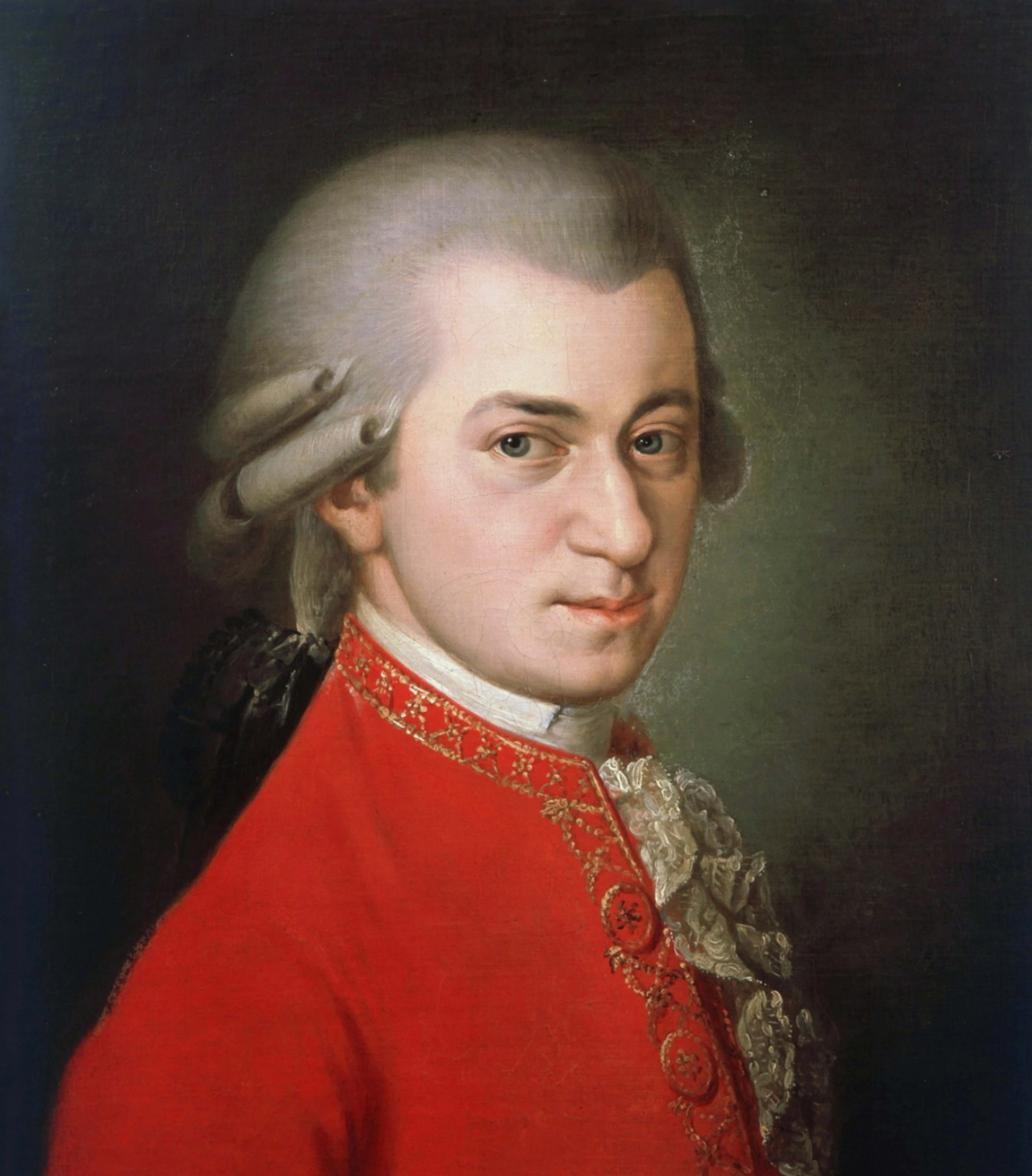
By Hanyu Tales (29th April 2025)
Almost everyone enjoys listening to music for different reasons, some find it soothing, others find it motivating. However, some argue that music without lyrics, more specifically, classical music, can lead to a multitude of cognitive benefits. This phenomenon has been coined “The Mozart Effect”, and has been defined by London Metropolitan University as:
““The Mozart effect is the theory that listening to Mozart’s music can induce a short-term improvement on the performance of certain kinds of cognitive tasks and processes.””
Researchers have mixed views on whether listening to Mozart’s music truly has a tangible impact on our cognitive abilities, but various studies on this topic and similar topics, including some focused on cognition during language-learning tasks, have found revealed some interesting findings.What Does the Research Say?
One of the key experiments that researchers refer to when arguing for or against the Mozart effect’s existence was an experiment on pre-school childrenwhich found those who were given music lessons for six months performed better at spatial-temporal reasoning tests. This is likely related to the fact that the areas of the brain associated with spatial reasoning overlap with the areas lit up while processing music, as explained in this article
This commonly mentioned experiment, however, was not the only experiment carried out that looked at Mozart’s music and its effects on the brain. This study on patients with epilepsyfound that Mozart’s piano sonata K448 decreased epileptiform activity. Meanwhile, a quantitative EEG study found that after listening to Mozart’s music, more alpha band EEG pattern was seen, which is linked to cognitive performance.
This commonly mentioned experiment, however, was not the only experiment carried out that looked at Mozart’s music and its effects on the brain. This study on patients with epilepsyfound that Mozart’s piano sonata K448 decreased epileptiform activity. Meanwhile, a quantitative EEG study found that after listening to Mozart’s music, more alpha band EEG pattern was seen, which is linked to cognitive performance.
How Does This Relate to Language-learning?
Given the seemingly noteworthy effects of Mozart’s music on the brain, learners have begun to discuss how classical music applies to language-learning. This article’s writer discusses some of the benefits of music, such as its calming effect.this one
It is important to emphasise that calm does not necessarily mean docile or lethargic; calm and focused is the optimal state of mind for learning. Fortunately, this study found that music can heighten focus too. In addition, a different studyfound that classical music can help us to remember new information. Language-learning requires remembering a lot of new information, from vocabulary to grammar structures, so it is not hard to see the relevance of these findings to language learners. Furthermore, research focused directly on language learning
It is important to emphasise that calm does not necessarily mean docile or lethargic; calm and focused is the optimal state of mind for learning. Fortunately, this study found that music can heighten focus too. In addition, a different studyfound that classical music can help us to remember new information. Language-learning requires remembering a lot of new information, from vocabulary to grammar structures, so it is not hard to see the relevance of these findings to language learners. Furthermore, research focused directly on language learning
Criticisms of the Mozart Effect
Despite the potential cognitive benefits of listening to classical music for language learners, it is crucial to acknowledge that listening to your favourite piece of Mozart’s music will not immediately make you 50 IQ points. Extraordinary claims require extraordinary proof, and while studies (such as those already discussed) supporting the Mozart effect do exist, they have not convinced everyone. For example, Gwed Dewarargues:
“No research has ever demonstrated that merely listening to Mozart’s music can have a lasting impact on general intelligence or IQ.”
Researchers from the University of Vienna have also argued against the existence of the Mozart effect, examining a multitude of studies and concluding that listening to Mozart’s benefits do not include the reported cognitive benefits, particularly related to enhanced spatial reasoning. Further reading
If you enjoyed this article, you might also like Learning Asleep: The nuanced relationship between language-learning and sleep. And if you want to master Chinese, get your free reading path to take you from your current level to reading Chinese literature.
Practical Applications
So was it all a lie? Probably not. But it is of course wise to take all research on somewhat subjective, nuanced topics with a grain of salt. However, this does not mean that Mozart’s music, or music in general, has no place in your language-learning journey. As is the case with most things, everyone’s experience will be slightly different, and there are certainly some practical applications for music in language-learning.
- Do what you enjoy: If you enjoy music, especially that without words, listen to it quietly. It is unlikely to do any harm and may indeed improve retention, make you feel calmer, and heighten focus
- Listen to Chinese music: Music is a great way to learn vocabulary in an enjoyable way, and often reveals useful cultural aspects alongside the language
- Drown out the noise: If you are studying in a public space like a coffee shop, music without lyrics will likely be less distracting than the screaming child imploring his mother to buy him a third chocolate cake
- Consistent over optimal: If you like studying more when listening to music, whether it is coffee shop jazz or classic musical, just do it—you are more likely to be consistent if you are having fun and being consistent beats everything else.
Start reading Chinese today
Free stories with HSK-graded versions
New to graded reading? Start at HSK 4, HSK 5 or HSK 6.

Short story
狂人日记
Diary of a Madman
By 鲁迅 (Lu Xun) • 1918
A classic short story exploring societal oppression and human cruelty.
Psychology
Political
Available in:
4032 chars

Essay
差不多先生傳
Mr. Almost
By 胡適 (Hu Shi) • 1924
A satirical tale about 'Mr. Almost', a man whose indifference to precision leads to absurd—and fatal—consequences.
Satire
Philosophy
Available in:
845 chars

Essay
孙子兵法
The Art of War
By 孫子 (Sun Tzu) • Circa 5th Century BC
A classic text on military strategy and tactics.
Philosophy
Political
Available in:
6170 chars